Onboarding dairy farm employees: New research published!

The Cornell Ag Workforce Development team collaborated with the Ag Workforce Development Council, NEDPA, NYCAMH, agribusiness, and CCE to carry out a project to help dairy farms develop better new employee onboarding programs for their farms. The project was funded in part by NY Farm Viability Institute. We were able to work with 36 farms across the state to improve onboarding practices, in spite of challenges from the COVID-19 pandemic. We collected complete data about project results from 17 farms and were able to evaluate the effects of our onboarding development project. The results of our findings were recently published in the Journal of Dairy Science for sharing throughout the U.S. and globally. Thanks so much to our participating farms!

Our full research article is available here: Onboarding dairy farm employees: Improving the new employee experience. For convenience, I’ve copied the article abstract below:

The first days and weeks on the job set the course for a new dairy farm employee. This project involved an educational intervention to increase the use of new employee onboarding practices in dairy farms and analyzed the resulting effects on (1) levels of onboarding practice use, (2) manager perceptions of employee performance, (3) manager satisfaction with the onboarding program, (4) manager concerns about compliance with state and federal employment regulations, and (5) employee turnover. Onboarding advisors (educators and consultants) provided templates, examples, and intensive facilitation directly with farm managers to learn and adopt onboarding practices. A total of 36 dairy farms participated in the onboarding project, and 17 provided a complete set of data from before and after the intervention and were included in this analysis. Dairy managers’ self-reported data indicated statistically significant increases, measured on a 4-point scale, in their levels of onboarding practice use after the intervention for compliance (increase from 2.47 to 3.24) and clarity (increase from 2.53 to 3.24). Of 23 recommended onboarding practices, dairy managers reported tripling their adoption of mission statements, first-day safety training, and sharing job descriptions, whereas adoption of 5 other practices more than doubled. Managers’ satisfaction with their onboarding program significantly increased, going from a mean of 2.65 before the intervention to 5.06 afterward on a 7-point scale. Dairy farm managers reported they were more concerned about their compliance with federal and state employment regulations after participating in the onboarding project, possibly due to increased awareness and rapidly changing regulations. Finally, of the 11 farms that reported complete employee turnover information, an encouraging decline in turnover was observed from before (44%) to after the intervention (28%), but the result was not statistically significant. Our findings demonstrate that, according to self-report, an educational intervention providing templates, resources, and access to professionals with human resource management (HRM) skills was effective in helping farms improve onboarding and increase adoption of specific HRM practices.

We’re planning to refresh and update the onboarding project and enroll some new New York farms during the summer of 2025. Please reach out to us if you are interested in participating, it can be farms of any type who are interested in improving your new employee onboarding program.


By Richard Stup, Cornell University. Permission granted to repost, quote, and reprint with author attribution.
The post Onboarding dairy farm employees: New research published! appeared in The Ag Workforce Journal.

Spanish & English Training for Farm Supervisors, Trainers, and Managers

Growing Great People: Training Skills for Dairy Farmers

Become an Effective On-The-Job Trainer

These trainings are supported by a grant from the New York Farm Viability Institute.

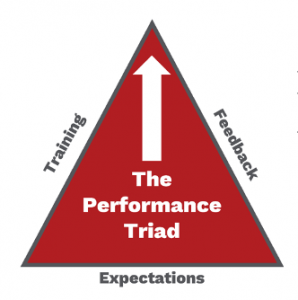
The performance triad with training, feedback and expectationsCornell Ag Workforce Development and the South Central NY Dairy, Livestock and Field Crops team are offering a series of hands-on regional training workshops from 1:00 to 4:00 PM at two locations on August 23 and 24.
Growing Great People: Training Skills for Dairy Farmers” will take place from 1 pm to 4 pm on August 23 in Scipio Center and from 1 pm to 4 pm on August 24 in Homer. The same workshop will be offered both days, so choose the date and location that work best for you. We encourage farms to send multiple employees. Anyone who is involved in training other employees can benefit from the workshop!

Presenters Dr. Richard Stup from Cornell Agricultural Workforce Development and Dr. Kaitlyn Lutz from the CCE NWNY Team will deliver the training in English and Spanish. Participants will learn skills to plan and conduct effective trainings for dairy workers and immediately put them to practice during the workshop through hands-on activities. All attendees will receive a bilingual, illustrated handbook to take home.

Cost is $20 per person and includes lunch. Bring a standard operating procedure (SOP) from your farm. Register online at nwnyteam.cce.cornell.edu/events.php or call Donette Griffith at: 607-391-2662.

DATE AND LOCATIONS

1:00 to 4:00 PM | AUG 23, 2022
Sunnyside Dairy
2243 Indian Field Rd
Scipio Center, NY

1:00 to 4:00 PM | AUG 24, 2022
New Hope View Farm
5937 US Route 11
Homer, NY

Effective trainings contribute to success of employees and the farm business. With training employees learn how to best complete their task and why it is important to the farm’s success. When employees have the knowledge, skills, and attitudes needed to do the job right, it saves time and avoids problems. With good training, staff feel important and involved, which keeps them engaged and reduces employee turnover.

The webinar trainings will overview the learning system of:

TELL: Describe the procedure and why it is important

SHOWDemonstrate the procedure and emphasize key points

DO: Allow the learner to try and answer any questions

REVIEW: Are the steps in the procedure done correctly?

After the webinar trainings you will be able to:

  1. Plan for organized and effective trainings
  2. Train in a way that works for most people
  3. Measure and follow up to make sure learning happened

Cornell Agricultural Workforce Logo

Onboarding: Don’t Underestimate Kindness 

by Libby Eiholzer, Dairy Technical Services Specialist at Cargill; and Richard Stup, Cornell Agricultural Workforce Development

Kindness can go a long way when it comes to onboarding new employees. Bringing cookies on the employee’s first day of work or taking a photo to add to the farm employee bulletin board can help make the employee feel like they belong and that others want them to be there. Use this space to commemorate employees work anniversaries. This promotes the dedication of your farm team and drives a sense of pride. 

Don’t underestimate the value of showing people respect and courtesy by calling them by their names. Ensure that your farm team is acquainted with the new employee and familiar with their name. This helps avoid the tendency to refer to new employees as “the new guy/girl”. After two months, he may still be the newest guy, but everyone should be able to remember his name long before then! 

Consider implementing a “kudos board” for employees to share compliments and appreciation for other members of the team. Share a “kudo” on the board for new employees welcoming them to the team expressing your excitement to have them joining your farm family.  


This article is part of the Onboarding Project supported by the New York Farm Viability Institute.

NYFVI logoCornell Agricultural Workforce Logo

Onboarding: Helping New Employees Become Part of the Team 

by Libby Eiholzer, Dairy Technical Services Specialist at Cargill

Onboarding is the process of bringing a new employee into the business, and successful onboarding drastically increases the chances that the employee will stay longer and be more productive and engaged.  Components of an onboarding program include completing mandatory paperwork and providing training on safety and the skills necessary to do their job. An essential, but often undervalued part of onboarding is making that new employee feel welcome and a part of the team. 

This is more than just saying “welcome to the team.”  The employee should hear that, certainly, but words should be reinforced by actions.   

Start from Day 1, or Before! Provide your new employee with instructions prior to their first day of work.  Simple information like when to arrive, where to park and what to wear will help their first morning on the job go smoothly.  You could even take it a step further and include this information in a letter that formally welcomes the employee to the business. Here is a template letter you can customize to begin utilizing this practice on your farm. 

On the first day of work, whenever possible, a member of the senior owner/managers should welcome the employee in person.  Rather than just a quick “hello,” emphasize the importance of the new employee to the team and the hopes that you have for them in the future.  Make it personal! Introduce your new employee to everyone they need to know. Reinforce this by providing them with an organizational chart to help them keep everyone straight. 

Give them an orienting tour around the farm.  Remember to point out not only the things that are important on your end (the time clock, safety equipment, work area) but also what’s important to them (bathroom, drinking water).  

Throughout the first day, encourage questions.  Your new employee will have them, so make sure you encourage them to ask.  By the end of the day, circle back to provide a little feedback to ensure that the employee is on the right track and that he or she will have a successful first week. 

For employees who are moving into housing owned by the farm, remember that the housing is where the employee will rest and recoup after work.  Therefore, the housing should be just as welcoming as the rest of the farm and staff.  Give the housing a check before move in to make sure that it is clean and that furniture and appliances in good working order.  This provides a welcoming atmosphere for your new employee and sets the standard.  If you want your employee to keep your housing neat, then they need to see what you consider neat. 


This article is part of the Onboarding Project supported by the New York Farm Viability Institute.

NYFVI logoCornell Agricultural Workforce Logo

Onboarding New Employees: Build Your Program This Winter!

“Safe, Productive, and Engaged, from Day One!” That’s the goal of farm employers who participate in Cornell’s Onboarding program. You can work with our team of experienced professionals to get an onboarding program in place at your farm this winter.

A 3-part series of webinars begins next week, December 8 and continues on December 22 and January 5. Find all the details here. Register for the upcoming series by click a button below. There is no cost to attend these webinars, the project is funded by a grant from the New York Farm Viability Institute.

Farmer Recommended

Past participants say:

Participate. It makes the process better for both employer and employee. It improves compliance, safety, performance, and morale.

It helps keep hiring organized and gives a sense of professionalism.

It organized and standardized our system of onboarding. We are now more in compliance than ever.

This made me so much more confident as I go through the new hire process with employees.

I got major bonus points on my FARM evaluation for the new employee training with my google classroom that I have set up!

Successful projects have a staff member who focuses on HR a few hours each week.

Benefits for Farms:

  • Ensures compliance with basic regulations and policies.
  • Provides clarification on work procedures and expectations, which results in better employee performance and safety.
  • Establishes a workplace culture based on values, philosophies and traditions.
  • Creates connected relationships at work that allow employees to engage and thrive.
  • Increases employee commitment and reduces turnover.
  • Provides accessible and realistic support for farm onboarding, even when labor and time are in short supply.

Expectations of Farms:

  • Establish a farm culture that is safe, productive and engaging. Set Clear, upfront job expectations that employees can fully understand.
  • Provide immediate safety training to avoid injuries. Promote compliance with all employment regulations.
  • Communicate important farm policies and procedures, especially those that may differ from previous employers.
    Overcome language barriers so that everyone can understand each other.

Sample Onboarding Tools:

Employee Handbooks, SOP’s, Training Videos, New Hire Forms, Job Descriptions, Farm Safety Plans, Checklists, Organizational Charts, Mission Statement, Written Policies, and more…

Cornell Agricultural Workforce Logo

Onboarding Seasonal Farm Employees – Get Organized for 2021!

Do you bring groups of seasonal employees onto your farm? Every year do you say that next year you will be more organized when they arrive? Do you find it challenging to keep up with all of the regulatory requirements for bringing on a new employee?  Then Onboarding Seasonal Farm Employees is for you!

Attend a 1.5-hour, online webinar Best Practices for Onboarding Seasonal Workers.  Learn the key things you should have in place to be ready to welcome a group of seasonal workers. This program will follow an onboarding guide, Onboarding Seasonal Farm Employeesthat was developed by Liz Higgins, CCE Eastern NY Commercial Hort Team, Mark Wiltberger, CCE Lake Ontario Fruit Program, and Richard Stup, CCE Ag Workforce Development. The onboarding guide covers:

  • required paperwork and documentation for a new hire, including seasonal, migrant workers
  • required trainings (with an emphasis on fruit and vegetable farms) and guides for developing a training plan
  • tips for bringing on new employees and having them productive from day one, especially when you are up to your eyeballs in work
  • tips for creating a welcoming environment where employees feel connected to their workplace and competent on the job

When you enroll in this program you will receive access to a Google Classroom with all of the resources organized for your farm and be automatically enrolled in all follow-up education, networking and technical assistance offered by the Onboarding Seasonal Farm Employees Program to help you have an onboarding plan ready by March 2021.

In February 2021 you will have access to four-weeks of online, personalized assistance to finalize your 2021 plan.

  • Week 1: Planning for the First Day: Special Topics: Ag Labor Housing, New Hire Paperwork
  • Week 2: Planning for the First Week: Special Topics: Required Benefits for Workers, Safety and Health Requirements
  • Week 3: Your Plan for the Rest of the Season: Special Topics: Documentation best practices, feedback and assessment
  • Week 4: Setting up a Training Plan for Seasonal Workers: Special Topics: Required NYS/Federal trainings, best practices in training, training resources

You will also receive one-on-one technical assistance from CCE and Ag Workforce Development staff on your onboarding plan and an opportunity to communicate with other farms in NYS who are working on their plans too.  This program will be self-paced, so we can accommodate your schedule.

This project is supported by a grant from Northeast Extension Risk Management Education under USDA/NIFA award number 2018-70027-28588.

To Register (chose one of four dates):  

January 26 | 3:00 PM to 4:30 PM

January 27 | 6:30 PM to 8:00 PM

January 28 | 8:00 AM  to 9:30 AM

February 1 12:00 to 1:30 PM (in conjunction with ENYCH veg school).  If you are not participating in the winter school but would like to take the onboarding class at this time contact emh56@cornell.edu to register.

Logos for Northeast Extension Risk Management Educatio and USDA

Onboarding and Training Farm Employees with Google Classroom

Cornell Agricultural Workforce Development and Cornell Cooperative Extension are offering a 30 minute training on using Google Classroom to onboard and train farm employees at 11 AM, February 3. The training offered via Zoom is free but registration is required.

Link to register for Onboarding and Training Farm Employees with Google Classroom

Have you ever wished there was a better way to organize paperwork, training materials, and business information to share with new employees? Could your farm provide a better employee onboarding experience if more than one person had access to the onboarding materials?

Many farmers struggle to provide a consistent experience to all new employees because it is difficult to organize all the necessary information. Google Classroom is a free online platform that farmers can use to store and organize information to streamline the onboarding process and help managers provide a positive experience for new employees.

As part of the Onboarding Dairy Farm Employees project, Cornell Agricultural Workforce Development and Cornell Cooperative Extension have created a Google Classroom template for farmers who are curious about this software. In this training, you will learn how to navigate Google Classroom and customize the template with documents and training materials from your farm.

Link to Ag Workforce Development onboarding farm employees resources

Link to Ag Workforce Development Google Classroom resources

Onboarding Dairy Employees 2020: Safe, Productive and Engaged from Day One

The first days and weeks on the job set the course for a new farm employee. Cornell Agricultural Workforce Development is seeking dairy farmers to participate in the second year of an onboarding project funded by the New York Farm Viability Institute.

Farms in the Onboarding Project work closely with an adviser to customize a professional and legally-compliant new employee onboarding process, and to improve farm human resource management practices. Well planned onboarding leads to a successful long-term manager-employee relationship with higher employee retention, safety, productivity, and job satisfaction.

Use Employee Onboarding to achieve:

  1. COMPLIANCE. Basic compliance with regulations and policies.
  2. CLARITY. Training on safety, work procedures, and expectations.
  3. CULTURE. Communicate your farm’s procedures, values, traditions and norms.
  4. CONNECTION. Help employees forge relationships at work and find their place to engage and thrive.

Over the next year, the Ag Workforce Development Team will partner with 25 farms in a three-session Zoom series to develop onboarding materials, trainings and methods.

If your farm is looking for a way to improve employee retention and increase overall productivity of employees, contact your local Cornell Cooperative Extension Educator or Richard Stup, Cornell Agricultural Workforce Development, at res396@cornell.edu.

Continue Using the Current I-9 Form

Very sharp HR managers may have noticed that the current Form I-9 is set to expire on 08/31/2019. U.S. Citizenship and Immigration Services (USCIS) just released a notice that employers should continue to use the current form after this expiration date until further notice, see USCIS note below. You can find helpful information and an I-9 Standard Operating Procedure (SOP) for farm employers at Cornell Ag Workforce Development’s Authorization to Work page.

USCIS Notice appears below…


08/27/19

Continue to Use the Current Form I-9 for Employment Eligibility Verification

Until further notice, employers should continue using the Form I-9 currently available on I-9 Central, even after the expiration date of Aug. 31, has passed.

We will provide updated information about the new version of the Form I-9 as it becomes available.

Employers must complete Form I-9 for all newly-hired employees to verify their identity and authorization to work in the United States.

Making SOPs Available to Employees

Utilization of Standard Operating Procedures (SOPs) is critical to any quality system. These policy and procedure documents lay out the regularly recurring activities performed within a business. Not only do SOPs provide organization, clarity, and consistency to a task, they play a large role in setting employees up for success in their work.

When a new employee begins work on a farm, they likely have many questions. When should I fuel up machinery? How do I wash and sanitize totes? How and when does fencing need to be repaired? Rather than tracking down a manager and asking these seemingly simple questions, a new employee may make assumptions or be hesitant in their work.  Preparing these step-by-step instructions and posting them in known locations allows for a training system that develops self-sufficient and proactive employees.

In order to be fully utilized, SOPs must be two things. First, they need to be written in a way that is easily understood. They should be clear and to the point. SOPs also may need to be translated. It is a good idea for SOPs to include pictures of each step of the procedure followed by a short caption describing the work being done. Second, SOPs should be placed in an accessible location. For a group of procedures, such as those for equipment maintenance, a binder of documents in the shop office may be appropriate. For documents that should be readily available, such as sanitation practices, instructions should be hung up on a wall in plain view. All SOP documents should be laminated as well.

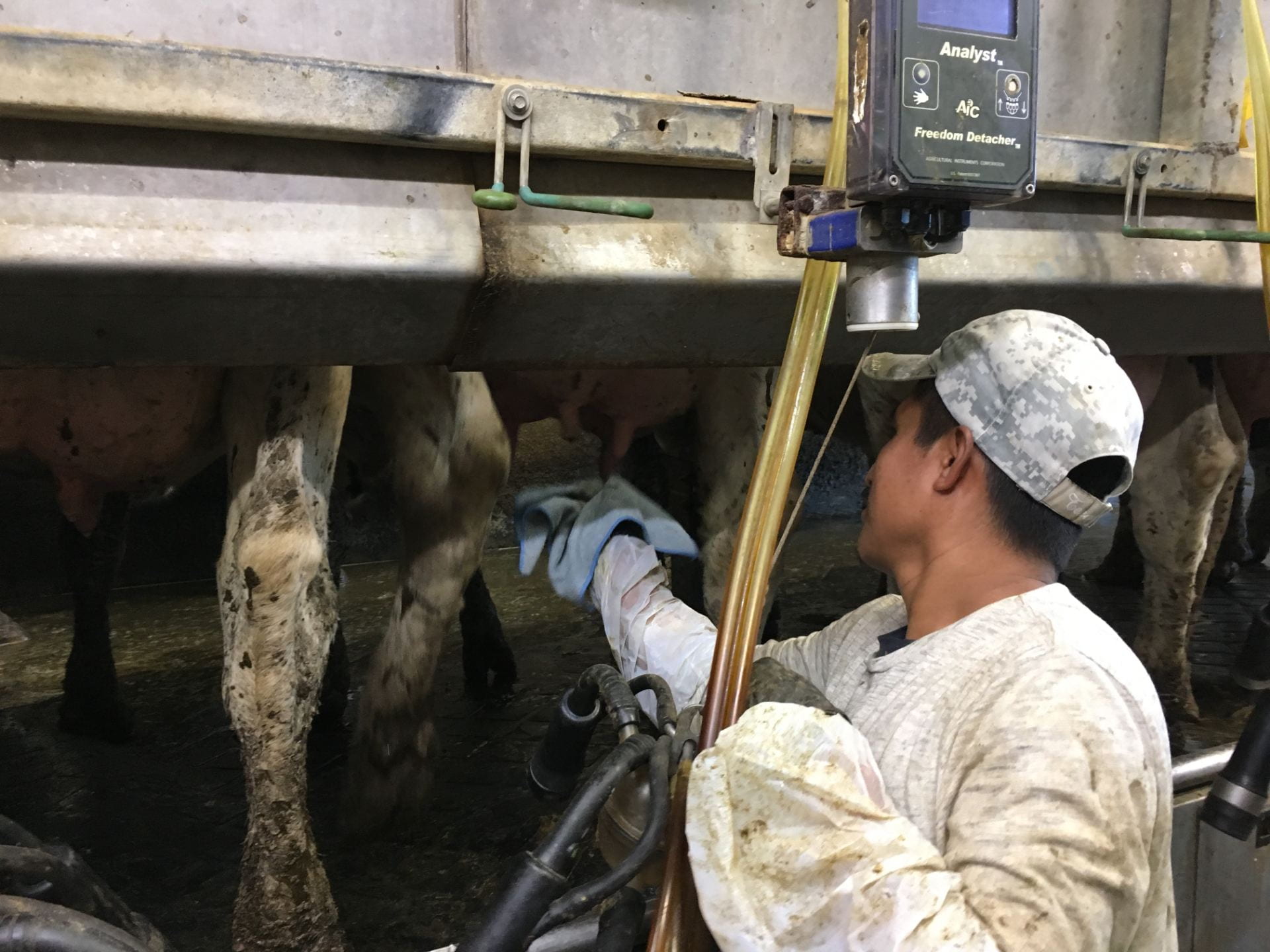
A person milking cows.

The first step in developing a set of SOPs is identifying what procedures would benefit the most from these documents. Where is there procedure drift? Lack of consistency among employees? Positions that turn over most often is a likely place to start. Keeping in mind that SOPs describe the tasks identified in job descriptions, start with basic procedures. Take photos of each step. Limit each procedure document to a page or two and be clear but concise. Utilize consultants to help in the development of SOPs. Once a set of SOPs has been created, let employees know they are there and that they should be followed. Only then, can SOPs be used as a tool in evaluating employee performance.

Visit https://agworkforce.cals.cornell.edu/human-resource-management/performance/ to access the SOP writing guide, example SOPs, and an SOP template.

__________________________________________________________________
By Jessica Skellie, Cornell University. Permission granted to repost, quote, and reprint with author attribution.
The post Making SOPs Available to Employees appeared first on Cornell Agricultural Workforce Development